What this guide covers
A wedding theme is a working framework, not a costume. It tells the florist what to build, the DJ what to play at cocktail hour, and the paper designer what typeface to use. Guests never say the word theme out loud; they feel whether the room is cohesive.
Every style below is followed by the palette, venue types, floral direction, decor, attire, music, and photography approach it naturally implies. Read the ones that feel close to your instinct, then pick the one that fits your venue and season with the least friction.
Classic
Best for. Couples who want a timeless celebration that will still feel right in photographs thirty years from now.
- Palette. Ivory, cream, soft gold, and a single accent color drawn from the season.
- Venues. Country clubs, historic estates, hotel ballrooms, restored New England inns.
- Flowers. Garden roses, hydrangea, ranunculus, stephanotis, and greenery with clean symmetry.
- Decor. Tapered candles, low compotes, monogrammed linens, and printed menus at every place setting.
- Attire. A classic gown or a black tuxedo, worn without irony. Wedding party attire in a single unified color.
- Music. A jazz trio during cocktail hour and a live band that opens with standards.
- Photography. Formal family portraits, unhurried couple portraits, and posed group photographs.
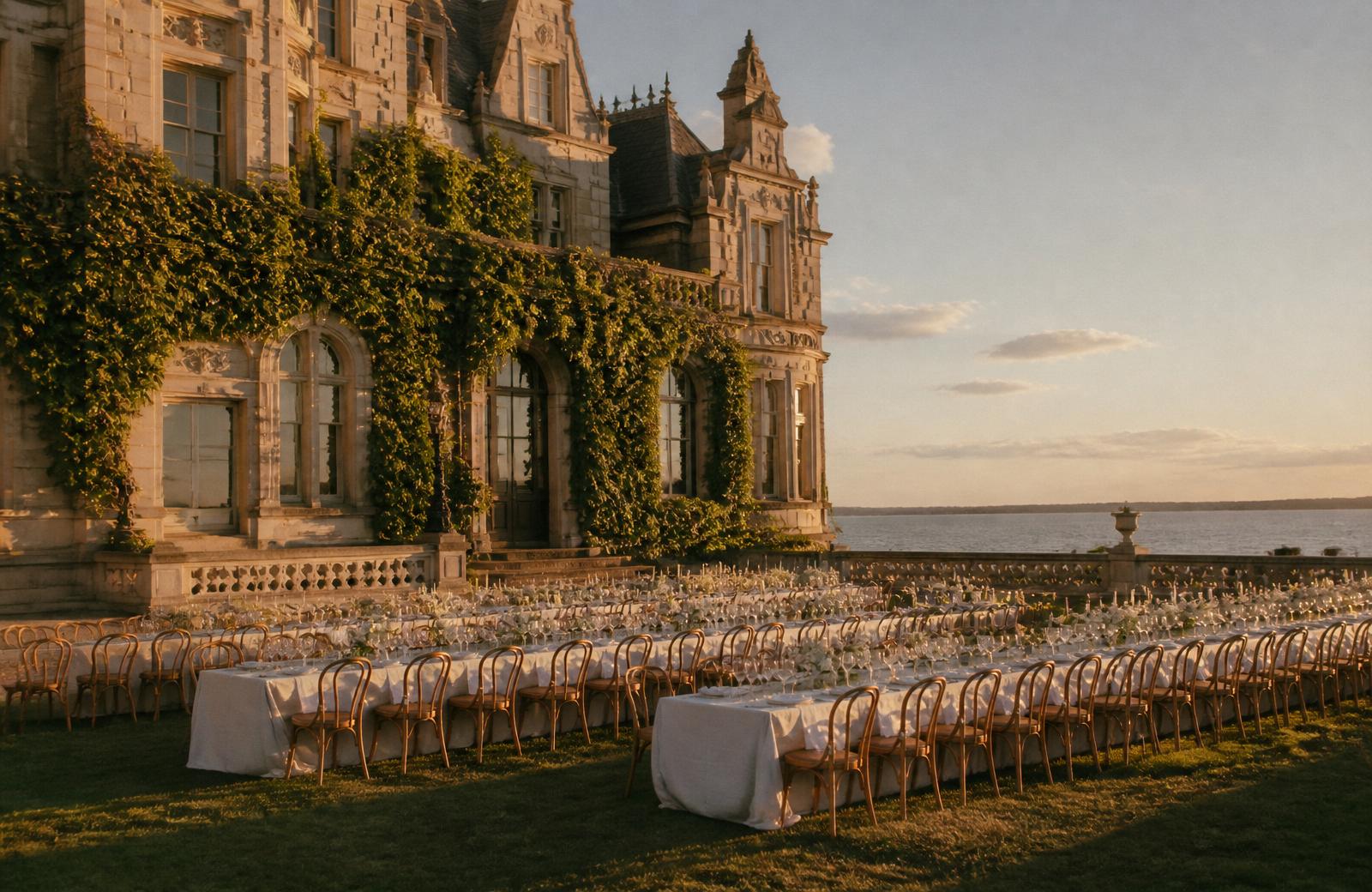
Elegant
Best for. Couples who want understated luxury and long tables set for a meal, not a spectacle.
- Palette. Champagne, warm white, muted taupe, and one metallic finish.
- Venues. Private estates, historic mansions, refined restaurant rooms.
- Flowers. Loose garden arrangements with heavy focal blooms and trailing greens.
- Decor. Layered linens, low candlelight, glassware from three complementary collections.
- Attire. Black tie or black tie optional.
- Music. String quartet for the ceremony, small band or refined DJ for the reception.
- Photography. A documentary approach with a short posed portrait window at golden hour.
Luxury
Best for. Couples building a multi-day weekend with elevated hospitality at every touchpoint.
- Palette. Deep neutrals with one saturated accent (garnet, emerald, or ink).
- Venues. Private estates with on-site accommodations, historic hotels, waterfront mansions.
- Flowers. Ceiling installations, cascading arbors, and dinner tables covered end to end.
- Decor. Custom rentals, printed everything, curated welcome gifts, and a produced timeline.
- Attire. Black tie for the wedding, cocktail attire for the welcome party, garden attire for brunch.
- Music. Ceremony strings, cocktail jazz, a full band, and a late-night DJ set.
- Photography. Two photographers, a videographer, and often a content creator for social.
Rustic
Best for. Couples drawn to natural materials and a warm, hands-on wedding day feel.
- Palette. Sage, taupe, terracotta, warm white, and unfinished wood.
- Venues. Working farms, restored barns, orchards, and inns with fields.
- Flowers. Wildflowers, dahlias, cosmos, garden herbs, and dried grasses.
- Decor. Wood tables, cross-back chairs, hurricane candles, and market string lights.
- Attire. Softer suits, tea-length or unstructured gowns, and comfortable footwear.
- Music. Acoustic ceremony music, folk during cocktails, a band with a bluegrass set.
- Photography. Warm, film-inspired coverage that leans into open shade and evening light.
Barn
Best for. Couples who love the sound of a wooden interior and the smell of a summer field.
- Palette. Cream, wheat, and one botanical accent (sage, dusty blue, or blush).
- Venues. Restored dairy barns, timber-frame event barns, and working farms with tent lawns.
- Flowers. Loose seasonal arrangements with garden roses, dahlias, and greenery.
- Decor. Long farm tables, wooden benches, market lights strung along the ridge beam.
- Attire. Softly tailored suits, unstructured gowns, and boots or block heels.
- Music. Acoustic ceremony, band or DJ inside the barn with generator backup planned.
- Photography. Interior coverage tuned to warm ambient light and mixed sources.
Garden
Best for. Couples marrying inside a designed landscape, usually in spring or early summer.
- Palette. The garden itself sets the palette; keep floral and attire tones inside it.
- Venues. Botanical gardens, estate gardens, arboretums, and greenhouse venues.
- Flowers. Complement the garden, do not compete with it. Focus on the tablescape.
- Decor. Restrained. Let the setting carry the visual weight.
- Attire. Light fabrics, garden-friendly footwear, and a wrap for cool evenings.
- Music. Acoustic ceremony music. Consider a permit for amplified reception music.
- Photography. Plan the ceremony for open shade or one hour before sunset.
Beach
Best for. Couples marrying on or beside the water, willing to plan around tides and wind.
- Palette. Sand, ivory, seafoam, and driftwood tones.
- Venues. Private beaches, oceanfront estates, coastal inns, and yacht clubs.
- Flowers. Wind-tolerant blooms, greenery-forward arrangements, and weighted vessels.
- Decor. Simple arch or bare backdrop. Programs or fans for sun exposure.
- Attire. Lightweight fabrics, considered footwear, and a plan for hair in wind.
- Music. Amplified ceremony sound is usually required on open beaches.
- Photography. Schedule portraits for the last hour of light and check the tide chart.
Boho
Best for. Couples who want a warm, textured celebration with room to breathe.
- Palette. Terracotta, rust, cream, warm brown, and one green.
- Venues. Orchards, farms, lofts, gardens, and outdoor venues with tent build-outs.
- Flowers. Loose asymmetrical arrangements with pampas, dahlias, and dried grasses.
- Decor. Vintage rugs, mixed seating, macrame accents used sparingly, and low candles.
- Attire. Flowing gowns, textured suits, and natural-tone shoes.
- Music. Acoustic and folk for the ceremony, a curated DJ set for the reception.
- Photography. Warm, natural coverage with a film-emulation edit.
Modern
Best for. Couples who want clean lines, edited details, and a confident use of space.
- Palette. White, ink, one accent, and one metal finish.
- Venues. Contemporary museums, art galleries, city lofts, and modern hotels.
- Flowers. Sculptural arrangements with fewer stems and more negative space.
- Decor. Considered signage, statement lighting, and stripped-back tabletops.
- Attire. Sharp tailoring, architectural gowns, and simple accessories.
- Music. A DJ with a live vocalist or a horn player for texture.
- Photography. Editorial coverage that treats the venue as part of the frame.
Minimalist
Best for. Couples who want one clear idea executed with restraint at every layer.
- Palette. Two colors, maximum, with one texture repeated across paper, linen, and floral.
- Venues. Modern galleries, private homes, and restaurant buyouts.
- Flowers. One bloom in volume, or an all-greenery approach.
- Decor. Clear glass, uncovered wood, and single-source candlelight.
- Attire. Uncluttered silhouettes and no logos.
- Music. One instrument for the ceremony, a small band or DJ for the reception.
- Photography. A single photographer with a documentary approach.
Vintage
Best for. Couples drawn to a specific decade and willing to source it carefully.
- Palette. Colors and finishes tied to the era, edited so it feels considered, not costumed.
- Venues. Historic homes, libraries, ballrooms, and preserved civic buildings.
- Flowers. Period-appropriate blooms in silver or crystal vessels.
- Decor. Vintage rentals, era-correct stationery, and typography that supports the theme.
- Attire. One or two era references. Do not costume the wedding party.
- Music. Live music from the era, delivered by a band that plays it well.
- Photography. A photographer with a portfolio in the period you want.
Romantic
Best for. Couples who want softness, candlelight, and a slower dinner pace.
- Palette. Blush, ivory, dusty rose, and warm gold.
- Venues. Historic hotels, mansions, and any room with warm interior architecture.
- Flowers. Garden roses, peonies, sweet peas, and ranunculus in loose arrangements.
- Decor. Layered candlelight from tapers, votives, and pillars in glass hurricanes.
- Attire. Soft silhouettes, lace or tulle overlays, and warm metal accessories.
- Music. Piano and cello for the ceremony, a smaller band for the reception.
- Photography. Warm, glowing coverage that leans into candlelight.
Industrial
Best for. Couples marrying in a raw urban space and dressing it with warmth.
- Palette. Concrete, ink, one warm neutral, and brass or copper.
- Venues. Converted mills, warehouses, breweries, and city event lofts.
- Flowers. Structural arrangements with dark or dried elements for contrast.
- Decor. String lights or pendant clusters, market tables, and layered linens.
- Attire. Sharp tailoring in darker tones with subtle metallic accents.
- Music. A DJ with strong low-end and lighting design.
- Photography. Editorial coverage that uses the architecture as scenery.
Mountain
Best for. Couples marrying in the White Mountains, Green Mountains, or Berkshires.
- Palette. Forest green, slate, wheat, and one warm accent.
- Venues. Mountain resorts, summit venues, historic inns, and private mountain estates.
- Flowers. Sturdy blooms and evergreen accents that handle wind and temperature swings.
- Decor. Wool throws for cool evenings, lanterns for outdoor paths, and layered candlelight.
- Attire. Warm layers within reach, closed footwear for uneven ground.
- Music. Acoustic ceremony music; check on-mountain amplification rules.
- Photography. Schedule around alpine weather; keep a plan for fog and quick weather turns.
Coastal
Best for. Couples marrying near, but not on, the water and using the coastline as backdrop.
- Palette. Navy, seafoam, ivory, and rope tones.
- Venues. Yacht clubs, oceanfront inns, waterfront restaurants, and lighthouse grounds.
- Flowers. Blue and white palettes with textured greenery.
- Decor. Nautical touches used sparingly. Wind-weighted centerpieces.
- Attire. Lightweight, wind-tolerant fabrics and considered footwear.
- Music. Amplified sound outdoors, with clear vendor guidance on power sources.
- Photography. Plan for wind and the last hour of light.
Historic venue
Best for. Couples marrying inside a preserved home, church, meetinghouse, or civic building.
- Palette. Take cues from the interior architecture; do not fight it.
- Venues. Historic homes, chapels, town halls, and preserved museums.
- Flowers. Period-appropriate arrangements; respect any candle or flame restrictions.
- Decor. Minimal additions. Focus spend on lighting and paper goods.
- Attire. Formal or black tie, matched to the venue's tone.
- Music. Ceremony music inside preservation limits (often no amplification indoors).
- Photography. Confirm interior photography rules and flash policies in advance.
Black tie
Best for. Couples hosting an evening wedding with a formal dress code communicated on the invitation.
- Palette. Black, ivory, gold or silver, and one deep accent.
- Venues. Ballrooms, mansions, restaurants, and estates that hold formal service.
- Flowers. Full arrangements with symmetry and height.
- Decor. Chargers at every place setting, printed menus, and elevated centerpieces.
- Attire. Tuxedos and floor-length gowns. Communicate the dress code on the invitation and website.
- Music. A full band with a horn section or a large ensemble.
- Photography. Two photographers and a videographer are typical.
Common mistakes
Fighting the venue
A modern theme inside a working barn or a rustic theme inside a grand ballroom costs more and looks less finished. Choose one that agrees with the room.
Too many colors
Two colors and one metal finish is a palette. Five colors is a mood board. Guests read the room before they read the details; keep the palette disciplined.
Prop-heavy decor
Signs, cutouts, and props date quickly in photographs. Spend on light, flowers, and paper before you spend on props.
Costuming the wedding party
One or two era or theme references land. Head-to-toe costume distracts from the couple in every frame.
Expert tips
Repeat one material three times
Whatever the theme, choose one material (linen, paper, taper candles, brass, or one flower) and use it three ways: on the tabletop, in the paper suite, and in the ceremony space. Repetition reads as design.
Design the tabletop first
Guests sit at the tabletop for hours. Spend design energy there before ceremony backdrops or entryway installations.
Test the palette at night
Colors shift under candlelight and warm string lights. If the wedding is at night, review swatches under the actual lighting before ordering linens.
Give vendors a single reference image
Ten images means ten interpretations. One clear reference image plus a two-color palette gets aligned proposals from every vendor.
Frequently asked questions
What wedding themes work best in New England?
Coastal (Cape Cod, Newport, Maine), classic New England (white church, historic hall, understated florals), rustic barn (Vermont, western Massachusetts, inland New Hampshire), foliage or fall harvest, and modern city (Boston, Providence, Portland). The theme usually follows the venue, not the reverse.
How do we choose a wedding theme?
Start with venue and season. A Newport mansion in September, a Vermont barn in October, and a Boston hotel in February each imply a different color, floral, and stationery direction. Fighting the venue on theme rarely reads well in photos.
What colors work for a fall New England wedding?
Deep burgundy, rust, ochre, sage, cream, and forest green photograph well against foliage. Avoid bright orange and yellow unless you want to compete with the leaves. Metallic accents in brass and copper suit the season.
What colors work for a summer coastal wedding?
Ivory, navy, pale blue, sage, blush, and soft coral hold up against harbor light and long sun. Avoid anything that competes with the water or clashes with a striped tent lining. Whites and creams photograph best in strong summer sun.
Is a coastal wedding always a nautical wedding?
No. Coastal weddings can lean classic (white, ivory, navy), harvest (September Cape Cod with darker florals), or modern (open beach, minimal decor). Nautical (rope, anchors, blue and white stripes) is one option, not the default.
Are seasonal flowers cheaper in New England?
Yes, meaningfully. In-season regional florals (peonies in early June, dahlias in September, evergreens in December) cost far less than imported blooms and hold up better in transit. Ask your florist to build around what is local and in season.
What is a New England foliage wedding aesthetic?
Warm-tone florals (rust, burgundy, terracotta), natural wood, brass or copper accents, candlelight over daylight bulbs, and menus that lean on seasonal produce and cider. The foliage itself does most of the visual work; over-decorating fights the setting.
How does a barn wedding differ from an estate wedding?
Barns lean rustic (long farm tables, string lights, seasonal florals, family-style meals) while estates lean formal (round tables, structured florals, plated service, evening lighting design). Both can be elevated; both can be relaxed. The style is a choice, not a rule.
What suits a winter wedding in New England?
Evergreens, candlelight, deep jewel tones, velvet, and metallic accents in gold, silver, and copper. Fireplaces, indoor ceremony spaces, and warm-drink cocktail hours (hot cider, cocoa bar) are the details that make a winter wedding feel intentional rather than second-choice.
Should the theme match across every vendor?
Yes for color palette, tone, and formality. No for literal repetition; if the invitations, florals, cake, and menu all repeat the same motif, the wedding starts to feel merchandised. Consistency of tone is what makes a wedding read as intentional.
How do we translate a theme into a signature cocktail or menu?
Anchor to local ingredients: New England cider, Maine blueberry, Cape Cod cranberry, Vermont maple. A single signature cocktail and one or two menu callouts is enough; a full themed menu usually reads as forced.
Can we mix modern and traditional in a New England wedding?
Absolutely, and it often reads best. A historic venue, a modern gown, minimal florals, and a contemporary bar menu can produce a much more distinctive wedding than fully committing to one aesthetic. The venue anchors; the details modernize.