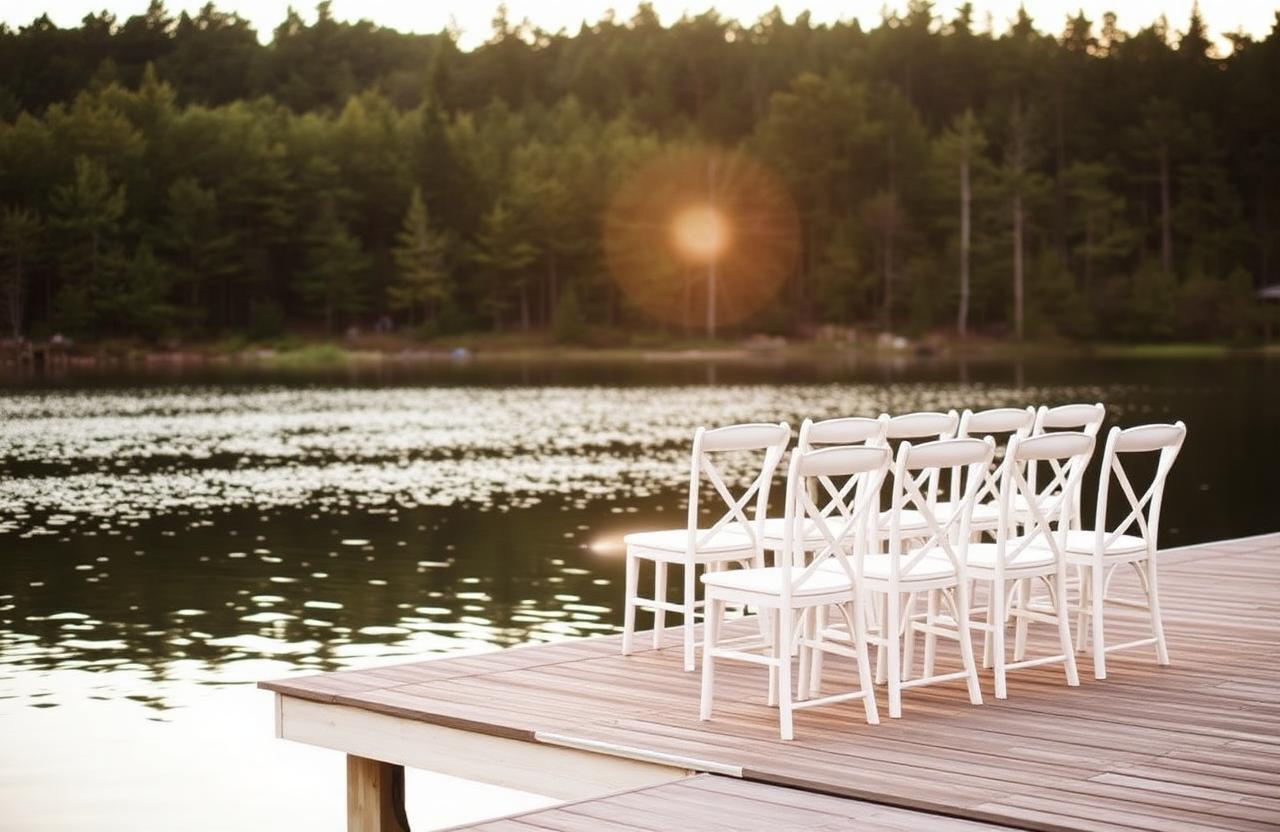
How to plan a New England wedding.
A phase-by-phase framework from 18 months out to the final two weeks, tuned to the region's peak seasons.
Plan a New England wedding in phases. Set budget and season first, then secure venue and date 12 to 18 months out for peak Saturdays. Book planner, photographer, and music next. Florals, catering, hair and makeup, and stationery follow inside 9 months. Season drives everything: peak dates in September and October book earliest.
Six phases, from 18 months to the door.
Every phase carries the decisions that unlock the next. Skip one and the timeline compresses everywhere downstream.
- 01
18 to 12 months out
Set the budget and rough guest count. Choose a season and a region. Tour and book the venue. This one decision drives every other. If your date is fixed, start venue outreach immediately; peak Saturdays in June, September, and October are the first to go.
- 02
12 to 9 months out
Hire the planner (full-service or partial). Book the photographer. Book the band or DJ. Book the officiant if outside the venue's roster. Confirm hotel room blocks near the venue for guest travel.
- 03
9 to 6 months out
Book the florist and caterer (if not in-house). Book hair and makeup. Choose stationery and send Save the Dates. Order attire (bride, groom or partner, and wedding party). Finalize rentals if the venue is raw.
- 04
6 to 3 months out
Send invitations 8 to 10 weeks before the wedding. Menu tasting. Finalize the timeline with planner and vendors. Book transportation. File any required paperwork for the marriage license in the state where you are marrying.
- 05
3 to 1 months out
Final headcount to the venue and caterer. Seating chart. Final walk-through. Confirm every vendor's arrival time, deliverable, and payment. Rehearsal dinner details. Pick up the marriage license within its state validity window.
- 06
The final two weeks
Hand off the timeline to your coordinator. Pack for the weekend, including the license, rings, vows, and vendor tip envelopes. Confirm the rain plan. Then step back and let the team you hired run the day.
Where the money moves.
A useful rule for New England: venue and catering typically claim 45 to 55 percent of the total, vendors 40 to 55 percent, and stationery, attire, and miscellaneous cover the rest. Build a 10 to 15 percent contingency into the plan from day one.
Off-season savings. Move a Saturday to a Friday or Sunday, or move from October to November, and you can often save 20 to 40 percent at the same venue with the same vendor team. Winter weddings in Boston, Stowe, and the Berkshires are a distinct, growing category.
Guest travel. Many New England venues sit an hour or more from the nearest airport. Lock hotel blocks and shuttle logistics early, and be clear on the map for out-of-town guests.
Planning a New England wedding: FAQ
How early should we start planning a New England wedding?
For peak Saturdays in June, September, or October at signature coastal, Newport, or foliage venues, start 12 to 18 months out. For off-peak dates or smaller weddings, 6 to 9 months is workable. The date, venue, and guest count decisions drive everything else.
What is the correct order of planning decisions?
Set budget and rough guest count, choose a season and region, secure venue and date, hire planner, then photographer and band or DJ, then florist, caterer, hair and makeup, officiant, stationery, and rentals. Attire and menu selections firm up in the final 3 to 6 months.
How is planning different in New England?
Season drives everything. Peak dates are compressed into a short foliage window, coastal weather can turn quickly, and many venues sit an hour or more from the nearest airport. Guest travel, lodging blocks, and rain plans need attention earlier than in warmer regions.
How can we save money on a New England wedding?
Choose a Friday or Sunday, move to November or early spring, cap the guest list, and prioritize two or three vendors that matter most. Off-peak dates at strong venues often save 20 to 40 percent versus a peak Saturday.
Do we need a wedding planner?
For weddings above 75 guests, at raw or remote venues, or across a wedding weekend, yes. A full-service planner earns their fee in vendor coordination, contract review, and day-of execution. Smaller weddings at all-inclusive venues can often use a month-of coordinator instead.
What is a realistic New England wedding timeline?
Twelve months out: budget, guest count, region, venue. Nine months: planner, photographer, band or DJ. Six months: florist, caterer, hair and makeup, officiant, save the dates. Three months: attire fittings, menu, rentals, invitations. Final month: seating chart, timeline, day-of logistics.
How many guests do New England weddings usually have?
The regional average is roughly 100 to 130 guests, with meaningful variance by state and venue type. Barns and estates often host 100 to 175, Newport mansions and Boston hotels handle 200 to 300, and small chapel or elopement weddings cap at 20 to 50.
When should we send save the dates and invitations?
Send save the dates 8 to 10 months out for weddings that require guest travel, which covers most New England weddings. Invitations follow 8 to 10 weeks before the date, with an RSVP deadline 4 to 5 weeks out.
Do we need welcome bags or a welcome dinner?
Not required, but common for New England weddings because guests travel. A simple welcome bag with local snacks, water, and a schedule works. Welcome dinners suit weddings where 30 or more guests arrive by Friday afternoon.
What paperwork do we need for a New England wedding?
You need a marriage license issued in the state where the ceremony takes place. Each state has its own rules on waiting periods, witnesses, and expiration. See the New England Vows marriage license guide for state-by-state specifics before you apply.
How much should we budget for a wedding in New England?
Plan against your state's average as a baseline: Maine and New Hampshire near $36,000, Connecticut about $40,300, Vermont about $44,720, Massachusetts about $45,000, and Rhode Island about $49,180 (The Knot 2026 Real Weddings Study). Add 10 to 15 percent for contingency.
What is the single most common planning mistake in New England?
Underestimating guest travel and lodging logistics. Because venues sit outside major cities and lodging blocks fill in peak season, couples who send save the dates late or skip shuttles frequently face guest complaints and last-minute costs.