Wedding venues in New England.
Coastal properties, mountain inns, restored barns, historic mansions, vineyards, and city-scale rooms, ranked by season and lead time.
Wedding venues in New England fall into six clear categories: coastal properties, mountain and inn venues, restored barns and working farms, historic estates and mansions, vineyards and orchards, and city-scale venues in Boston, Portland, Providence, and Hartford. Each pairs with a different season and books on a different timeline. Signature peak dates run 12 to 18 months out.
Six categories, six seasons.
Every New England wedding venue sits in one of these families. Use the category to set expectations on season, guest experience, and lead time.
- 01Coastal properties
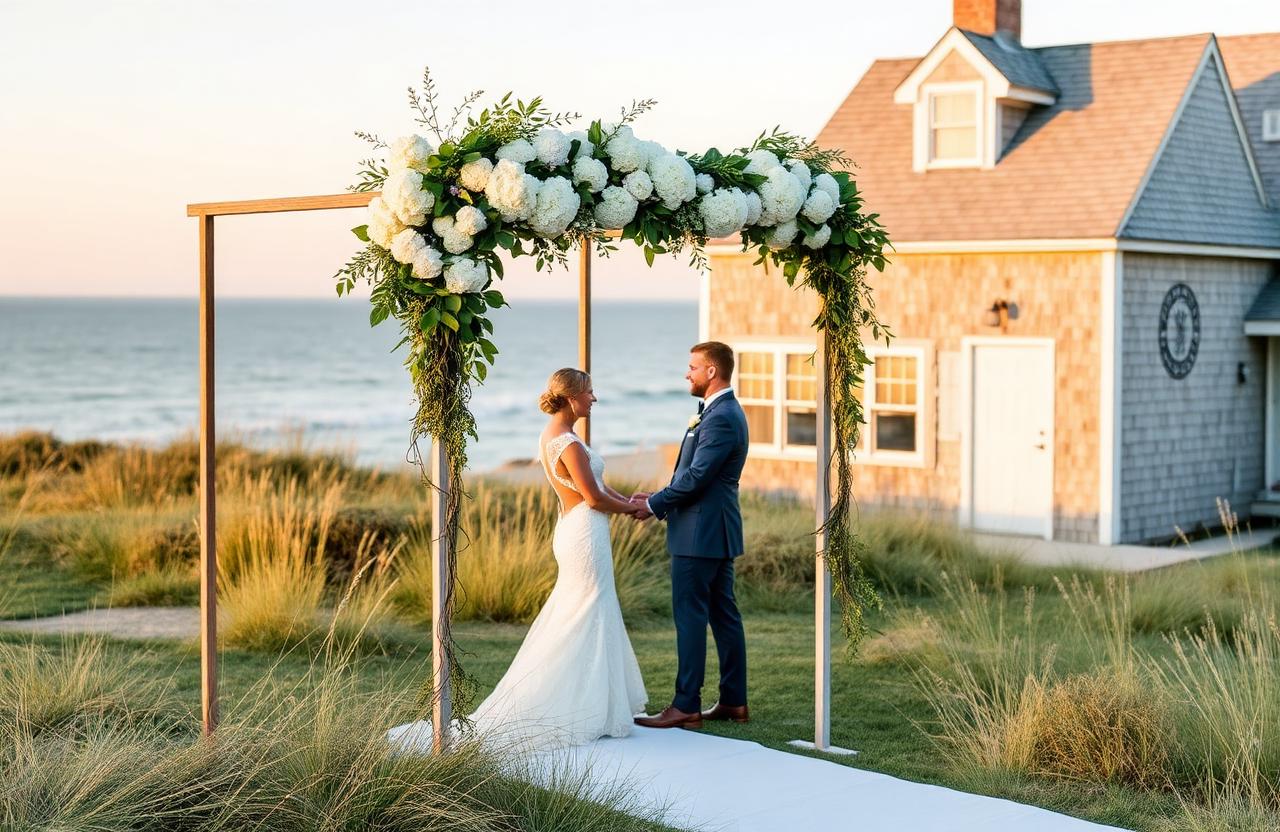
Harbor clubs, beach houses, and rocky headlands from Newport up through Cape Cod, the Massachusetts North Shore, and the Maine coast. Long summer light, sea breeze, and the earliest booking pressure of the year.
- 02Mountain and inn venues
Stowe, the White Mountains, and the Berkshires. Full-property inns that carry a weekend of welcome dinners, ceremonies, and farewell brunches. Fall foliage weekends are the most competitive dates on the calendar.
- 03Restored barns and working farms
Common across Vermont, western Massachusetts, and inland New Hampshire. Some are fully outfitted with tables, chairs, and kitchens. Others are raw shells that need rentals, generators, and staffing. Confirm inclusions before comparing prices.
- 04Historic estates and mansions
Gilded Age mansions in Newport, historic estates in Boston and the Berkshires, and Connecticut shoreline properties. Formal architecture, mature gardens, and interiors that carry a wedding without heavy styling.
- 05Vineyards and orchards
Growing category on the Massachusetts South Coast, southeastern Connecticut, and Rhode Island. Best in late summer through harvest, with the crop itself as the backdrop.
- 06City-scale venues
Hotels, historic halls, and cultural spaces in Boston, Portland, Providence, and Hartford. Strong for winter and shoulder-season weddings and for guest lists split between multiple metro areas.
Where each venue type lives.
Maine is anchored by Portland and the coast. Working harbors, island venues, and long summer evenings define the season. See Maine venues in context.
New Hampshire centers on the Lakes Region, with the White Mountains and the seacoast adding mountain and coastal choices. See New Hampshire.
Vermont is the strongest state in the region for barns and working-farm venues, with Stowe leading the calendar. See Vermont.
Massachusetts moves easily between Cape Cod (coastal), Boston (city), and the Berkshires (mountain estates). See Massachusetts.
Rhode Island is Newport-driven. Gilded Age mansions, sailing clubs, and shoreline estates hold most of the season. See Rhode Island.
Connecticut anchors on Mystic and the shoreline, within an easy drive of both Boston and New York. See Connecticut.
The questions that decide it.
- 01
What is the total site fee, and what does it include (tables, chairs, linens, lighting, kitchen)?
- 02
Are we required to use in-house or preferred vendors, and can we bring outside choices?
- 03
What is the defined rain plan, and where does the ceremony move to under weather?
- 04
What is the true guest capacity for the exact layout we want, not the maximum on paper?
- 05
What are parking, shuttle, and lodging logistics for our guest count and geography?
- 06
What is the noise curfew, and does that time work with the reception we are planning?
- 07
For a wedding our size in the last two years, what did the all-in cost actually land at?
New England wedding venues: FAQ
What are the main types of wedding venues in New England?
Six categories cover most weddings in the region: coastal properties (harbors, headlands, beach clubs), mountain and inn venues, restored barns and working farms, historic estates and mansions, vineyards and orchards, and city-scale venues in Boston, Portland, Providence, and Hartford. Each pairs with a different season and style.
How far in advance should we book a New England wedding venue?
For peak Saturdays in June, September, and early October, plan to book 12 to 18 months out at signature coastal, Newport, and foliage venues. Off-peak dates in late fall, winter, and early spring often open inside 6 to 9 months.
Which venue types are best in each season?
Summer favors coastal Maine, Cape Cod, and Newport. Early fall favors the Berkshires, Vermont, and inland New Hampshire for foliage. Late fall and winter favor Boston hotels, historic estates, and Stowe mountain venues. Spring favors greenhouses, city venues, and vineyards.
Should we choose a coastal or a mountain venue?
Coastal venues deliver long light, sea breeze, and open horizons, and they book earliest for summer. Mountain and inn venues deliver a weekend-long guest experience, foliage backdrops in fall, and quieter shoulder-season pricing. The right answer depends on season and travel logistics.
Are barn and farm venues fully outfitted?
It varies. Some restored barns include tables, chairs, lighting, and full kitchens. Others are raw shells that require rentals, generators, and staffing. Confirm the venue's inclusions in writing before comparing prices across barns.
What questions should we ask every venue before booking?
Ask about total site fee, in-house vs preferred vendors, rain plan, guest capacity for the exact layout you want, parking and shuttle logistics, noise curfew, on-site lodging, and what a real all-in cost has looked like for a wedding your size in the last two years.
How much does a New England wedding venue cost?
Site fees vary widely: rural barns and small inns often start around $5,000 to $10,000, midrange estates and historic halls run $10,000 to $25,000, and signature Newport mansions and Boston hotel packages can exceed $40,000 before catering. Catering is usually separate unless the venue is all-inclusive.
Are all-inclusive venues cheaper than piecing it together?
Not always cheaper, but usually simpler. All-inclusive venues bundle catering, rentals, and coordination, which reduces vendor management. A la carte venues can save money at smaller guest counts if you already have a planner and a preferred vendor list.
Can we get married outdoors in New England without a backup plan?
No. Weather is too variable, especially on the coast and in the mountains. Every outdoor ceremony needs a defined rain plan on site, ideally in the same building or under a permanent tent structure with sides.
Do New England venues have noise curfews?
Most do. Rural barn and estate venues typically end amplified music between 10 and 11 pm to comply with town noise ordinances. City hotels often extend later. Confirm the exact curfew in writing before booking your band or DJ end time.
How many guests can most New England venues hold?
Most fall between 100 and 200 seated with dancing. Newport mansions and Boston hotels can host 300 or more. Small chapels, farms, and inns often cap at 75 to 120. Ask for capacity in the exact layout you want, not the maximum standing figure.
Do we need a permit if the venue is on public land?
Usually yes. State parks, national parks, town beaches, and forest lands issue their own ceremony permits with group size limits and setup rules. The venue or park office should walk you through the process; apply well in advance.